
Drupal at Texas State

I had the pleasure of sitting through the presentations for the Web Content Management Systems class taught by my colleague Jacie Yang. This was the first time she taught the class in our program, the School of Journalism and Mass Communication, and the results were nothing less than amazing. It’s a graduate-level class. Some of the students had taken a basic Web design course previously, but some had not. She had a big task in getting everyone up to speed enough to work with the challenges of hosting and designing a CMS. While the course started with students developing (or in some cases upgrading) their personal sites to WordPress, the final project was a complete Drupal site. I have been observing the students in the lab during finals week, and I was impressed by the focus and teamwork I witnessed. These were all individual projects, but I watched her students help each other out, troubleshoot for one another, discuss various modules and themes. It was all quite heart-warming.

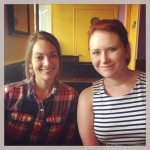
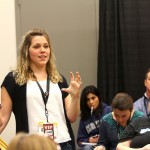
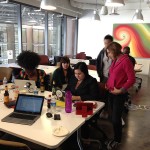
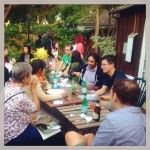
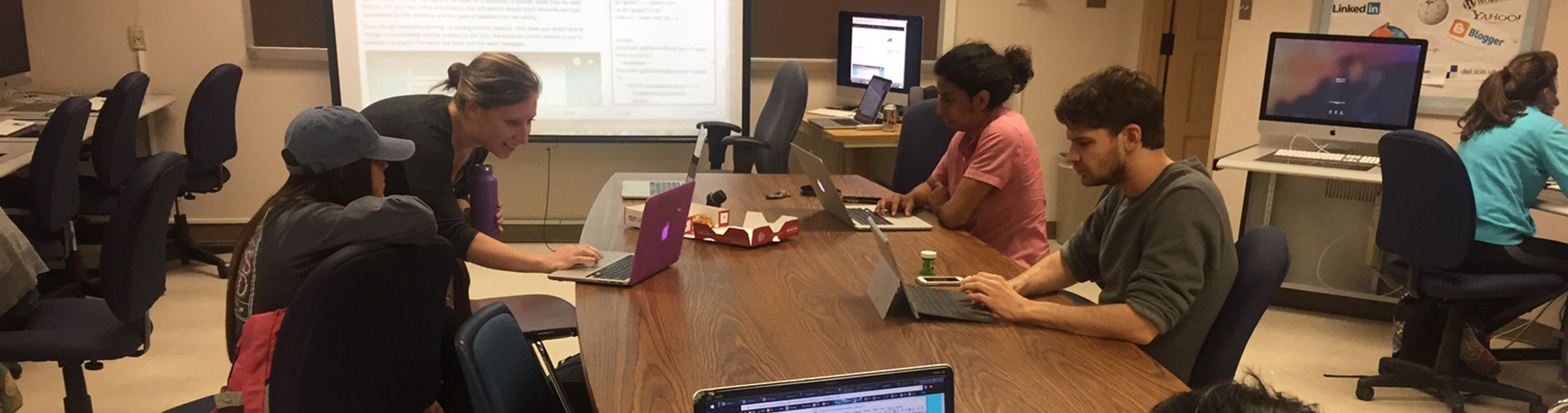
The students presented their sites last night. The topics ranged from video game and music reviews to food sites (lots of food sites, Yum!) and other personal interests. You can see photos from some of the projects below, and I know Jacie will soon be posting links of the finished products. The sites had great original content and photography and engaged various interactive features of Drupal. I was extremely impressed.

Afterward, we talked to the class about what they felt they learned and the value of doing such a project. Below is a list of some of the comments (paraphrased). These are just some quick observations that we will be thinking about in the future:

  • Important to know HTML/CSS – it’s really the foundation; you can’t avoid it.
  • Problem solving, figuring things out on your own. I asked one student how she felt when she figured things out and got them to work, and her response was an enthusiastic “Awesome!”
  • Being resourceful. Using online resources. Thinking through problems and knowing that there may not be anyone else to help you. Jacie provided extensive support to students in the lab, but I witnessed students modeling her approach to problem solving and not automatically seeking her help in every situation. Even though it would take them more time to figure things out on their own, they grew to rely on themselves.
  • Persistence – never giving up and knowing that they had the capability to solve any problems. Knowing that one has the agency to fix problems and create the space any way he or she wants builds confidence.
  • Immediate application to their workplace – One student mentioned that she had already helped out on a work problem by suggesting that the solution was probably “in the CSS.” She was right.
  • Creativity – One student expressed that she enjoyed being able to pick her own topic and design and layout the site, select and create her own media. Many people will use content management systems in their careers, but few will have had experiences that allow them to create and customize one.
  • The students were generally very enthusiastic about what they achieved during the semester. They indicated that they had encountered frustration at times, but felt the overall experience was valuable. I think they all accomplished much more than they anticipated that they could at the beginning of the semester and now think differently about their tech competencies.

In our discipline, we often debate the role of skills vs. theory, but we sometimes lose sight of the intellectual benefits of skills courses, having students actually execute media end-to-end. Both Jacie and I use methods that integrate skills and concepts, resulting in unique perspectives that provide students a solid platform for careers that require not only digital media skills, but to also participate in the digital strategy of the organization.

I must also point out that in this class of 19, 14 of them were female. I often have the same mix in my technology classes, this semester with 2 men out of 18 in my graduate class and 6 out of 14 in my undergrad. Still think tech is solely a man’s game? I am convinced that we have an opportunity in Journalism and Mass Communication to contribute to the solution of the gender divide in technology by increasing the level of tech skills we teach in our programs, by adding programming concepts like Drupal, PHP, Ruby on Rails, Django, APIs, data manipulation and visualization, and teaching them in ways that are contextually relevant to communication.

Both Jacie and I teach basic Web Design as well, to both graduate and undergrad students. We collaborate regularly on how to update the course to provide students the foundation they need in coding, graphics and multimedia. I also teach an Advanced Online Media course. We use it as a platform to try out new topics and skills. Currently, I want to emphasize programming tools that aid in data visualization. Next fall, we will be introducing a required core class to undergraduates that will address many of these topics as well. I am extremely proud of the digital media offering we have developed in our program. I am also very lucky to work with a colleague like Jacie who is skilled and passionate about these topics.

I’ll be back in the lab today with my Web design students, helping them complete their final projects. I’ll post some images and links to those next week.

Click on the images for larger view or to see in lightbox presentation.

So Long, Gowalla. We’ll Miss You

The news broke on Friday and was confirmed today on their blog, that the Austin-based location service Gowalla would soon be no longer. They are being acquired by Facebook, which means they are closing up shop in January and some of their employees (most likely developers) will be moving to Palo Alto to live out the Zuckerberg dream.

This is sad on a number of levels. It is sad for Austin to lose the profile of a Silicon Valley-type startup and the talent that came with it. Many of their employees were quite active in the tech community, appearing at meetups and often giving some of the most engaging and interesting presentations.

It’s sad, because a few Texas State alum were employed there. I’m guessing support-type people may not be making the move to CA. But they did, for a time, have an amazing experience working for a company with smart and motivated people, gaining experience they really wouldn’t have gotten anywhere else.

The photo on the Gowalla blog and posted above also makes me sad. A great big thumbs up as the wallaby slowly disappears… I had grown pretty fond of the little guy.

For the founders, they move on from running their own show to finding their place in the Facebook mechanism. But, they, and everyone who worked there, should be proud of what they created. They developed a platform that people loved and used. It was beautiful, and they upped the bar on app design. So, if nothing else, this will be their legacy.

Could things have turned out differently for Gowalla? It’s easy to be a Monday morning QB, and there were probably opportunities they missed or could have more aggressively pursued. But they weren’t interested in being another coupon or deal app. They had bigger goals, telling stories and sharing experiences with the world. The repositioning a few months ago seems to have been too little, too late. But I always appreciated the purity of their mission, which CEO Josh Williams eloquently articulated any time I heard him speak.

And, so it goes. Facebook swallows another great company, only to put it to sleep. I enjoyed the heck out of Beluga, but it’s gone – found it quite useful during SXSW and Mass Comm Week at TXST. And the same will happen to Gowalla. Running a startup is hard, and making one into a successful entity is only achieved by a handful. Most of us will never set out to start our own business, so the people who do are of a special lot.

I have many friends at Gowalla, many people there whose work I admire and whose company I have enjoyed. I wish everyone the best as they embark on their next chapter.

Honoring Steve

I don’t think I fully appreciated the role of Apple and the vision of Steve Jobs until I analyzed the events that happened during the hour or so before I learned of his death. Yesterday, I was assisting the students working on Mass Comm Week with a video project promoting the event. They were working in a computer lab, around the corner from my office and the computer lab in which I teach. They were, of course, on an iMac using iMovie. During my afternoon class, while I was teaching, I was using the iMacs in my office and classroom to download footage from Ustream, so they could have b-roll from previous years of the event. I was running between the three rooms, downloading files, encoding, saving – all while I was assisting students in my afternoon class with their web projects. And the Mass Comm Week students were assembling these clips in their iMovie project. We thought we were done around 6pm. But the video was missing something. It needed a little intro music. I had another class to teach at 6:30pm and the students, who had been working on the project for two days, had to move on to other obligations. So, time was tight. In a few minutes, we devised a plan, selected a song from one of my friends (Brent Adair – check him out at http://www.brentadair.com/), downloaded it from iTunes, edited and exported it in Garageband selecting the sweet acoustic guitar intro, dragged it into iMovie in several places and edited the way it would play. We were able to race through it, and I think I even got to class with six minutes to spare. During that class, I used a powerful iMac, while I was teaching on it, to upload the video to YouTube, and we were done. This feat of creativity, collaboration and multi-tasking would not have been possible without the tools that came from the vision of Steve Jobs. We were able to move from “we can’t” or “we don’t have time” or “we don’t know how” to “we can do this” and “let’s make this happen.” I must add that the students volunteered to make this video. It was not a requirement imposed on them by me, it wasn’t a class assignment. It was something they thought would be cool to make and fun to work on.

Here is the result of their effort which they will be using during class visits to promote Mass Comm Week:

In my evening class, we had just covered the news of Tuesday’s Apple announcement and were moving on to the regular course topics, when a student raised his hand. He had breaking news. Students apparently glance at their smart phones, many of which are iPhones, during class. He said Steve Jobs had died. I think I knew what he was going to say before the words even got out of his mouth, but yet I was more shocked and stunned than I imagined I’d be. My head fell into my hands, but I had a whole classroom looking at me. Anyone who has taken a class from me knows my reverence for the man, so I know they were fixated on my reaction. I turned to the iMac at the front of the room and went straight to Twitter. We started reading the news and updates as they came in. I attempted a discussion. I failed. I had to call for a break so I could compose myself before continuing. We came back, looked at a few of the sites that were already posting tributes, and then continued with class. What else was there to do? I feel bad that I wasn’t more able to professionally grasp the teaching moment, but I am hearing today that other professors have been equally emotional in their discussion of the death of this icon and inspiration. We moved on, and the class learned new skills and created great things with the iMacs at their disposal. I guess that’s the best way to honor Steve, by being inspired by him.

Many people are referencing Steve’s commencement speech at Stanford in 2005, where he talked about death and loving what you do. I shared his conviction to the latter, writing a post called On Loving What You Do, back in 2009. There are many elements of Steve’s legacy, but if people can simply grasp this concept, much of the rest will follow.

I wrote a piece, only about 5 weeks ago, when Steve submitted his resignation as CEO, about how much he meant to me. I’m sad that he didn’t have more time. I’m amazed that he obviously stepped down at the point when his health was so bad that he had no choice. I marvel at the last presentation he did in June. We have no idea of his pain and suffering, because he didn’t share that with us. We barely have a clue about what a world without Steve Jobs will be like, but we’re about to learn.

I heard Steve Wozniak, the co-founder of Apple, talking on CNN last night. He said he felt unfocused, like there was a giant hole that will never be filled. I feel that way myself. My heart goes out to his family and personal friends. I hope that the public outpouring brings them solace, not additional, undue grief. There are few real heroes in this world. But when someone delights us with the tools that inspire confidence and creativity in ourselves, well, to me, that’s something. It’s been the driving force behind my life and career for more than a decade. I will miss Steve Jobs.

7 Things Everyone in Your Organization Should Know…

This weekend, I attended the Online News Association Conference in Boston. It was a great gathering of multimedia developers and those concerned with all things digital – quite a fantastic event. I had the opportunity to participate on a panel called “If I Were in Charge, I’d…” Proposals for the panel were solicited before the conference, and mine was one of six selected. The presentation is below, but I wanted to provide a few more details, beyond the eight minutes I had to present. And I wanted to see if there was any feedback or critique. Rob Quigley live blogged the entire session, if you’d like to see the other topics and presenters. And ONA just posted the video of the whole session.
ONA: 7 Things Everyone Should Know
Are you in charge? Maybe you’re an editor or a general manager of a newsroom, or perhaps you’re a dean or director of a university organization. Maybe you lead a media company that specializes in PR or Advertising. Do you consider yourself in charge of a digital media organization? And, does everyone in your organization know that they work in a digital media organization?

Does everyone in your organization know what an API is and why that’s important? Do they know what SEO means and what value it brings the organization? Are they familiar with the type of CMS your organization uses and how it works? And do they know some basic concepts like HTML or how to embed a video or widget onto another Web page?

If I were in charge, I’d be making sure everyone associated with the organization – every reporter, columnist, copy editor, photographer, videographer, every faculty member, every associate – I’d even go as far as saying that every person who answers the phone – knows these things and more. This is not the template for a two-hour workshop. This is not a quick fix or a tweak. This is a tectonic shift in the ways that people envision what it is they are expected to know and do and the kind of organization for which they work.

I propose 7 Things Everyone in a Digital Media Organization Should Know:

1. Everyone would know the history and background of the Web.

Why? Because it’s fun to study the history of something. And, it provides a foundation for understanding the future. By learning about the role of the ARPAnet (and later Tim Berners-Lee in Switzerland), the people involved and the culture surrounding the development of the Internet, we begin to see what makes this environment different. We can learn about the origins of hacker and open source culture and why this presents an alternative and a complement to commercialization. Oh, and we’d know that Al Gore didn’t invent the Internet, and that he never actually said he did.

2. Everyone would understand the key terms of digital media.

We must speak the same language in order to collaborate and have a shared understanding. You can’t have the tech folks spewing jargon while the rest of the organization stands around the sidelines and rolls their eyes. We’re not talking about buzzwords and marketing posturing, but things that everyone needs to know, like what an Application Programming Interface (API) is and why you might use one, why your organization should have them and who benefits from them. When we talk about the “cloud,” what do we mean and how is that different than where we’ve been hosting things all along? What is Search Engine Optimization and how does that compare to Social Media Optimization? What do we mean when we use the phrase “data visualization” and what are these platforms (frameworks) of Ruby on Rails and Django? People may not actually perform these functions or use these platforms, but they should have a clue about what they are and what they do.

3. Everyone would know how Google makes money.

Why? Because Google makes a lot of money. And I bet most of your organization has never paid anything to Google to use their multitude of services. Google has a $170B market cap, one of the most successful companies in history. They made the majority of their $29B in revenue in 2010 with advertising – those little ads you see on the sides and the sponsored links on the top of your Google search. But it’s the power of their search algorithm and their ability to provide products to us that are useful and that integrate with our lives, that allows them to continue to learn more and more about us. Knowledge is power, right?

4. Everyone would be able to explain why social media is important.

No, Twitter’s not about what you ate for breakfast. And Facebook’s not just a place to upload photos of your kid’s birthday party. A modern media organization understands that interaction is the key. The technologies known as Web 2.0 drive interaction with the audience that was unheard of in prior eras. They make media a conversation, and those conversations have value. People are gaining an expectation of participation because of their participation on social networks, and they will begin to find media irrelevant that don’t give them something to do, don’t provide a user experience. Get ready for new social platforms to be introduced over time. Google, who is the king of search, is now trying to develop social competencies with Google+. Location-based platforms, reviewer sites, online games… new things are coming out every minute. But you can’t expect people to understand them if they don’t use them. People should be encouraged to try new things. And they should be comfortable with the idea of using social media to develop their own brand or to support that of the organizations with which they work.

5. Everyone would understand how data can tell a story.

That doesn’t mean that everyone will know how to program a data visualization. But everyone should understand that a data visualization is an important element of storytelling, just like text, photos, video, other graphics. The benefit is the interaction, the ways that you develop to integrate the user into the story. There are a million ways to do this, and we are just starting to see brilliant examples of this type of work by organizations like the New York Times, the Guardian, the LA Times, the Texas Tribune, the Associated Press, the Chicago Tribune, ProPublica and more. The example I used in my presentation is the Rent vs. Buy interactive that the New York Times did several years ago, but is still updated on their site. You can read a story about whether or not you should rent or buy a house, but how does that really help someone make their own decision, with their own variables? Everyone needs to understand the power of this type of information and comprehend their role in creating it. How would they propose such a project? Who will they work with? What tools can they use and what resources are out there? This doesn’t mean someone needs to tell them or train them. They need to be focused enough on the importance of it that they are seeking out this information on their own and figuring out ways to integrate it into their own workflow. That’s how the people who are doing this kind of work learned it… by figuring it out themselves.

6. Everyone would know a little HTML (and some CSS for that matter).

Why? Because it’s the language of the Web. If you don’t know the language, you can’t understand the platform. You need to know HTML to maximize your ability to customize the things you do in blog or content management systems. And it is the foundation for more advanced coding, like CSS, Javascript, JQuery and on and on. For the most part, code snippets are available in libraries, so what most people are doing when they work in code is tweaking and customizing, rather than cranking it out from scratch. It’s not that everyone should become a programmer, but it wouldn’t hurt to know a bit about how it all works. Knowing a little html can go a long way in being able to read and tweak code (like reading a foreign language versus writing or speaking it). And, it’s not hard. It’s a markup language, using tags to give meaning to text. It fits in perfectly with a communicator’s skill set. And it’s fun to learn.

7. Everyone would understand the elements of a digital-, and increasingly mobile-, first strategy.

Until this happens, your organization will still be mired in legacy culture. People need to understand how it changes the processes of the newsroom, how their roles change, and most importantly, how it affects the experience of the user. Breaking a story on Twitter is the new “scoop.” The analysis and conversations that happen after is what a news organization does now. Sure, you still produce a paper or newscast, but that’s only a part of what you do. It’s what you share all day long and what others share of the work that you are doing that establishes your brand and your value. You have to re-prioritize that to your organization.

So, as I said above, this isn’t about developing a 2-hour workshop and then going back to the way things have always been. We’re not a weekend behind and then we’re all caught up. Digital media has been developing for the better part of two decades, and it’s time everyone who works in media realizes they work for a digital media organization. We can’t solve the pressing problems of the field with just a few who are in-the-know. We need everyone to be working toward the same goals, gaining knowledge and contributing to the solutions. This will require constant, ongoing and consistent messaging in the following areas:

  • Leadership must evangelize from the top – it’s not enough to have the tech people at the grass roots take responsibility for training the whole organization. Leadership must communicate that it is everyone’s responsibility to keep up-to-date and learn. It must be a consistent part of all messaging, all meetings, the mission and goals of the organization.
  • Foster a meetup culture – how can they learn? Well, for one, they can start attending any of the multitude of professional meetups that are probably already happening in their area. These resources exist. There are regular presentations on relevant topics, and you don’t even have to organize them. Just make sure your organization knows that it is an expectation that people participate. And, people should gain a level of comfort in going to groups where they don’t feel like they have a command of the material. Don’t be afraid to be the stupidest person in the room. In fact, that’s preferable. That’s when you learn. And, like a lot of this stuff, it’s fun. You meet people, who may be able to help you professionally, or guess what..? You just might end up with a few new friends. Personally, I view my professional network for its power in assisting my students, but I really enjoy meeting people and learning about these topics, and have made some wonderful contacts in the process. Don’t attend a meetup that you dread or hate. Find one that interests you. They’re out there.
  • Encourage innovation through exploration – It should be expected that people try new things when they are released. Get on Google+, try Foursquare and Gowalla, sign up for Storify… Guess what? They’re free. Yes, they take time. But if that’s what your job is, then you are using that time wisely. Having a little knowledge about a new platform and some perspective can be quite beneficial when trying to weigh options and quickly make decisions about the usage and relevance of platforms. And you don’t want to ignore new technologies to the point that you suddenly have “unexpected” time on your hands, do you?
  • Read tech/media publications – This should be a given. We expect people to keep up with news, be on top of things, know their beats, keep up with trends. Well, this is our business now, so shouldn’t we expect people to keep up with it? Know about the key players, tech mergers, new media projects, startups. There are numerous publications, but Wired, Fast Company and a multitude of blogs, like Mashable, 10,000 Words and TechCrunch, are a good start.

I have had success in sharing these concepts with students. My feeling is that they gain an enthusiasm for the future of media by having it presented in this manner. These are opportunities, not annoyances. There are challenges, but everyone needs to be on board so they can be overcome. If I were in charge, I’d find a way to make everyone excited about the future of media.

Are you in charge? What do you think about these points? Does everyone in your organization know these things? Maybe you’re not “in charge.” I’m not either. This was just a hypothetical exercise. But what do you think your organization should do to integrate these concepts, if you think they are valid at all? Let me know if you have any additional items or if you just think I’m full of it. I’ll be interested in any discussion generated.

Some resources I have used:

The Internet: Behind the Web – it’s an old video, and is probably only available on VHS (I have since dubbed it DVD), but it’s a great way to learn about the history of the ARPANet, Internet and Web. It has some abridged content from the longer series Nerds 2.0.1

Download: The True Story of the Internet – this is a great series that covers Browsers, Search, E-Commerce and Social Networking. It brings everything up to date after the above video.

Hacks/Hackers Glossary – a great set of terms and definitions developed by the main Hacks/Hackers organization. Their a meetup group, probably a chapter in your area, that brings journalists and programmers together.

Lynda.com - this is a software and programming training library. It costs money, but on a month-by-month basis, it’s cheaper than purchasing a book to learn a particular language or platform.

South By Southwest – You should attend conferences. ONA is fantastic. Another one that I love is the South By Southwest Interactive Festival. It’s huge and broad, but nothing has influenced my approach to teaching media more than my regular attendance, year after year, at this event. And, like a lot of these recommendations, it’s fun. Trust me on this one. Plan to attend SXSW in March.

Storifying the Story

I’m working on a chapter for a new version of the book The Future of News: An Agenda of Perspectives, edited by Maxwell McCombs, Amber Willard Hinsley, Kelly Kaufhold and Seth Lewis. One of the features of my chapter is to develop some information boxes with interviews, Q&A’s or other supplementary material. I decided to Storify a story about Storify and see if we can use it as art in the chapter. Enjoy!

View “Storifying the Story: Merging News and Social Media” on Storify

More SXSWi Recommendations

Vote for My SXSW Idea!

Looks like this is the last week to comment on SXSW panels, and there are several more that I identified in my perusing of the Panel Picker. You can see my first batch of picks on an earlier post, but here are another 20 or so more that I also think are cool.

Excellent People I Admire
PyLadies: Using Enthusiasm to Diversity Python – Features Katherine Jarmul of Loud3r

Longhorn Startup Rodeo – Features Bob Metcalfe, UT Professor and Internet Pioneer; Bob’s doing great things with fostering the startup scene in Austin.

Give Fans a Reason to Buy; Make Direct-to-Fan Work – I haven’t had much time to focus on the music panels (the music panels below are music-themed panels in Interactive), but this one looks great. Brendan Moore of Receptive Music hosts folks from Pledge Music, Topspin and more.

News/Journalism
Open-Web, Open-News: Reporters and Developers Remix – Mozilla

Social
Google + for your Organization: Pivoting on People – Ronald Ho from Google

What the Heck Happened to the Open Social Web? – Google and Mozilla

The Google+ Design Team Tells All – Google team, including Andy Hertzfield

The Social Mobile Revolution – features Gareth Davis from Facebook

Social Design Strategy – also Facebook people

Intellectual Property Issues in Social Media – features people from a variety of universities and the Electronic Frontier Foundation.

Music (proposed in Interactive)
Can Social Save the Music Industry – Rdio, Turntable.fm and Songkick

Data Mining Music – The Echo Nest

Programming & Development
Backdoor to the AppStore: Build Apps Without XCode – Paypal

Mobile Apps Must Die – Frog Design

CMS Showdown

HTML5/CSS3
Mad CSS3 Skillz - always love tutorials and workshops

HTML5 and CSS3: Does “Now” Really Mean “Now” – Oh, the browser issues.

Gender
Designing Experiences for Women – Happy Cog

Why Women Fail to Rule the Social Networks

Let’s Stop Bitching and Start Learning – Girl Develop It

Why the Future Favors the Ways of Women - Young & Rubicam

That should do it. Make sure you also view my earlier post , for more recommendations. Of course, there’s my panel proposal “Covering SXSW: Social Media & Experience Learning.” I’ve had some really insightful comments from students who have participated in the SXTXState.com project. Would love it if you’d check it out, vote or comment. I think the panel picker closes on Friday Sept 2 (but don’t be surprised if they extend the deadline), so get your votes in for your favorites now!

Thanks for reading!

Thank You Steve

Many of the posts over the past day since Steve Jobs announced his resignation from the position of CEO at Apple have been about what he meant to the computer industry and Silicon Valley, the way he innovated music and communications and his general contributions to the world. This post is about what Steve Jobs has meant to me.

Coming to UT as a Ph.D. student in 1999, straight from Compaq Computer and having worked at NCR Corporation (at the time a maker of PC clones), I was fully indoctrinated in the PC world. I’d pretty much never even touched a Mac. My first experience was in the computer lab, when I was trying to get out my 3 1/2 inch disk from the Mac that had been available for me to use. I had to ask the kid sitting next to me, who was likely a sophomore, what to do, and I was aghast when he suggested “dragging it to the trash.” So much for being an impressive and all knowing graduate student. In the beginning, I had arguments with friends and colleagues about Apple computers just being too expensive and not worth the extra money. I saw them as an unnecessary luxury.

But over the course of the year or so that I began using Macs on a regular basis in my teaching, something changed. The Compaq PC I had at home became the object of my own personal ridicule and disdain. I just didn’t feel the same working in Windows as I did on the Macs at school. When it came time to replace my PC, I was pretty much on board with Apple and there was no going back. I remember watching Steve do the introduction of the round-based iMac on TV. The way the computer raised up slowly to reveal the swiveling, thin, flat screen integrated with the unit. I don’t think I’ll ever forget that moment. I had to have that computer. I used it for six years of solid computing – Web design, photo and graphic manipulation, video editing. It was still going strong on the day I replaced it with a 24″ iMac, and it is still proudly sitting here on the desk next to me, ready for me to fire up any time I need to check for an old file. I use a MacBook Pro that belongs to my department, and the lab I teach in now at Texas State was replenished with beautiful 27″ iMacs last year.

In that time, we have been introduced to iPods, iPhones and iPads. I own them all. I feel a bond with each product, and I love the way they integrate with my life. I also love talking to students about Apple, their philosophy, their contribution, their leader. I often have students who don’t feel the same way I do now about Apple, who are dyed-in-the-wool PC fans, and I can relate, because I was one of them. I have tried over the years to explain in a fair manner, just what the appeal is. But it’s not that easy. It’s difficult to articulate all the things that make Apple special. It’s in the details. And it’s how it makes you feel when you use one.

When I was a graduate student teaching at UT, I taught a semester in a lab that had both Macs and PCs. The students usually selected the computer based on their own cultural alignments with the platforms. One day, one of the normal PC people arrived late to find all the PCs had been taken. He was a little stunned when I told him to just sit at the Mac and he’d be fine. A few days later, I noticed him arriving early, but selecting one of the Macs instead. By the end of the semester, he asked, “So, how much do one of these Macs cost?”

That student, like many others, was converted just by using one, and that’s the brilliance of Steve Jobs and Apple with their retail stores. Conventional wisdom was that the retail effort would fail. But Apple knew that if they got the products in people’s hands, allowed them to use them at will and have their questions answered, they could convert people. And boy was that successful. They put the same detail into creating a retail experience as they did in developing products. I remember one day I was in Chicago, walking down Michigan Ave. It was a blustery winter day, as it often is in Chicago, and I was trying to decide how much further I could walk before I would freeze. I remember looking up and seeing the Apple logo. I walked into the store and it was like entering the pearly gates. It was welcoming and spacious and most importantly, warm.  The predominant color of white gave the appearance that I was floating on a fluffy cloud. I was able to freely use the computers, browse, check email, and no one bothered me. No one tried to sell me anything. People smiled and were friendly. That was the first time I entered an Apple store, but I can recall that feeling of contentment like it was yesterday. I knew something different was afoot there. Just about any major city I visit, one of my top attractions is a visit to the Apple store. I stood in line for eight hours at the Austin store at the Domain when I bought my first iPhone (3G) and also stood in line (only 45 minutes this time) at the popup store during SXSW this year to get my iPad2.

A few years ago, in a graduate class, we were discussing the Apple/PC dichotomy and I asked the class if they “loved” their computer. The people who owned Macs enthusiastically raised hands without missing a beat. But the PC users all were sitting around a bit befuddled. One of the students said “Well, I like my PC and it does everything I need it to do.” And, I shot back, “I didn’t ask if you liked your computer, I asked if you LOVED it.” He was confused. A year later, and after regular use of the Macs in our lab and hearing me talk about my own love of Apple products, the same student wrote this blog post, detailing his own journey over to Apple. He understood that the brand is everything and there has to be something behind it, even if you can’t completely articulate exactly what that is.  ;-)

I always ask students if they are a Mac or PC on the first day of class. It gives us a good platform to talk about the philosophical differences between them, Apple’s closed nature of developing for their hardware only, versus Windows which runs on a variety of manufacturers’ products. Same with Android – we discuss the philosophical and practical differences in the two.  Just yesterday, I had students beaming with wide smiles as they talked about the Apple products in their lives. One student introduced the topic by saying that she was about to celebrate her one-year anniversary with her MacBook on Sept. 2. People have relationships with these products. And, I truly believe that the reason why people feel so strongly about the products is in the way the products make them feel about themselves.

And while Apple is a big company, it’s Steve Jobs that set that tone for the entire organization, and more so, several industries. I have watched just about every black turtleneck keynote since 2001, followed the live blogs intently for those that were not broadcast. I marvel at the way Jobs is able to captivate, calmly, yet with enthusiasm. I lived for the “one more thing” moment. I have read many articles, watched just about every video on his life that is available. I am inspired by his ability to “think differently.” I am stunned by his intuition, his ability to drive innovations in the direction of where we will be, not where we are, and to make products that people will want, not what they tell you they want. I was in awe reading this article in Wired in 2008 by Apple expert Leander Kahney “How Apple Got Everything Right By Doing Everything Wrong.” The article ends with this quote by author Geoffrey Moore. “Everything that’s happening is playing to his values. He’s at the absolute epicenter of the digitization of life. He’s totally in the zone.” What an enviable position in which to be. I want to be in that zone.

But the thing that most inspires me about Steve is his commitment to doing great things through loving what you do. I am someone who knows the power of that statement, who knows the dramatic and profound difference it can make in one’s life to simply find a career that you love. Steve let me know that it was more than OK to have sought that out. It was required. He said, in that great Stanford commencement speech in 2005 , “don’t settle,” and I can think of no better advice.

I have never met Steve Jobs, never been in the same room as him, never attended an event where he was speaking, never shared the same air with the man. And while I have met a few people in my life that I would consider magical, I can only imagine what it must be like to be in his presence. I’ve read the articles about how tough he is, about how mean he can be. But most who have experienced this seem to convey that he got the best work out of them through the process. I try to keep that in mind when I am critiquing students, when I am tough on them, because I know that will get the best work out of them and they will be proud (maybe later) of that experience. I know that experience will prepare them for the world much better than those who are coddled or who slide through the system. But I know I’m no Steve Jobs. No matter what I do, I will always fail in that regard, because he’s the one that set the bar for excellence. We can only strive to be more like him.

I, like millions of Apple fans and consumers the world over, was saddened by the finality of his announcement to resign as CEO. On the one hand, it was expected and has been in the works since his indefinite medical leave in January. Yet it was so shocking. The wording and brevity of his resignation letter leave a lot of questions, mostly in regard to his health. We all want to know that Steve Jobs is happy in this world. And regardless of his position, or lack thereof, at Apple, I am content knowing that someone like Steve Jobs exists, so we know what is possible. I am lucky to live in a time that includes him.

Thank you Steve, for all you have meant to me. I wish you joy and the best in health. Stay hungry. Stay foolish.


Photo of the Apple products owned by one of my colleagues, Jacie Yang. Stylish... and delicious.

This post was composed on an iMac. Most photos were taken with an iPhone.

SXSW 2012 Panel Picker – Picks and Recommendations

Vote for My SXSW Idea!

How is it possible that it is that time again? The SXSW Panel Picker went live this week, and there are more than 3200 proposal for you to peruse, vote for and comment on. If you don’t have time to read them all, here are a few that I think are most interesting.

First, the shameless plug. I have a proposal titled “Covering SXSW: Social Media and Experience Learning,” that deals with using SXSW as a platform for an experiential learning project. My graduate class Advanced Online Media has covered SXSW at SXTXState.com for the past four years (this will be our fifth!), but Hans Ibold from Indiana University and Russell Rains of St. Ed’s have also used SXSW for student projects. Two SXTXState alum, Dale Blasingame and Maira Garcia, round out the panel. Please take a moment and check out the proposal as well as the site. The most recent posts have some images and videos that highlight the student activity. We would appreciate your support.

It’s great when our TXST grads propose panels, and this is not the first time for some of these folks. Dee Kapila from KUT has the proposal Big ‘Ol Babies: Why Baby Boomers=Public Media FAIL. Her panelists include people from WOSU Public Media and PBS, and they will deal with the ways that the older generation and digital natives differ in their approach to decision-making and leadership in a public media environment. I think this is a provocative idea and one worth exploring. Should provide for some lively commentary.

Michael Trice took a class with me a few years ago, and was part of the very first SXTXState.com project. He has since done a Fulbright Fellowship and is currently working on a Ph.D. at Texas Tech. Michael’s panel is Community Regenerati​on through Digital Literacy and it describes a project in Bristol, UK called the Knowle West Media Centre’s University of Local Knowledge project. This will be a great case study in learning about effective ways to spread digital literacy. Michael is also endorsing this proposal by Partisans.org – Reporters and Evangelists: Politics of Online News.

Another TXST grad, Jordan Viator who works for Spredfast, has the proposal #Socialbiz FTW: Achieve Business Goals with Social. This panel deals with how organizations can engage social media outside of the marketing department for business results. This has been key to the success of many organizations, how social aspects get introduced to all levels and functions.

Way back when, I used to teach at UT, when I was working on my Ph.D. One of my then students, Cary-Anne Olsen is now Web and Graphic Designer at Concordia University. I was happy to see her proposal for a Higher Education Technology Meetup. It’s proposed as a core conversation, but is framed as a way to discover and network with higher ed colleagues specifically.

Jill Ward is another of my former students from UT, who now works at Convio. Her proposal When the Webinator and Mobile Have a Love Child will deal with the future of mobile to non-profits. Convio is one of the most progressive companies in engaging non-profits with new technologies to help them achieve their missions.

Another of my former students, Kristin Nicely, this time from the year I spent teaching at Virginia Commonwealth University, now works in Austin at T3. She forwarded a couple of their panels along to me, and they look quite interesting: Why Creative Technologists are the Future and provocative: Which SXSW Technologies Do Not Matter to You.

A good friend and colleague who was in the Ph.D. program at UT with me and is now at San Diego State is Amy Schmitz-Weiss. Amy works with Rosental Alves on the International Symposium in Online Journalism and the new #ISOJ Journal, so you might be familiar with her from those activities. Her panel idea is Innovations in Nonprofit Journalism – What is Next? With panelists from ProPublica, Knight Foundation, Watchdog Institute and the Investigative News Network, this will be a good overview on the state the non-profit model for media.

I have had the opportunity to meet and work with some of the most innovative people in journalism right now. Burt Herman heads up Storify as well as the Hacks/Hackers group (of which I am one of the Austin organizers). His proposal is From Foreign Correspondent to Entrepreneur and will share his experiences of integrating innovation in his career. We used Storify during SXTXState.com last year, when it was still in private beta, and we loved working with it.

Jenny 8 Lee works with Burt on Hacks/Hackers. Her proposal deals with the same mission as the meetup group, how to foster better understanding between communicators and coders: Content and Coding is Not a Commodity: How. She’ll be joined by panelists from Washington Post and the FCC.

I have been fortunate over past few years to get to know both Aron Pilhofer of NY Times and Jim Brady of Journal Register. They are both on a proposal submitted by Stephen Buckley at Poynter Storytelling Beyond Words: New Forms of Journalism that would also include Bill Adair of St. Petersburg Times and Politifact. This one is kind of a no-brainer in terms of acceptance. These are some of the most innovative and progressive in the journalism realm right now. What a great opportunity for them to share their vision. This line of the proposal sums it up “This panel is for geeks who care about storytelling, and it’s for storytellers who care about digital tools.”

I see proposals by two of Aron’s staff, who are fantastic programmer/journalists. Brian Hamman will discuss Second Screen Dashboard: Cover Live Events Better dealing with some of the NY Times special projects for Oscars, Super Bowl, etc. And Tyson Evans, who did a core conversation with me a couple years ago, has Journalism’s Got 99 Problems, Design is #1. This panel features Miranda Mulligan from The Boston Globe and David Wright from NPR. I like the approach that design is so critical to everything with which we engage, but is rarely talked about in regard to the future of journalism. You just have to look at what Apple has done to recognize the value of design.

Another person I have met in my interactions with progressive news teams is HO Maycotte. I first met him when he led the developers at Texas Tribune, but he is now working on his own projects. His proposal, Who Owns Your Audience?, broaches the question that many are missing. How do you control and benefit from audience data when you are increasingly using public platforms like Facebook to engage them?

Another media aficionado that I know from my Texas Tribune dealings is CEO and editor-in-chief Evan Smith. He’s one of the panelists for the Nieman Journalism Labs panel titled Skills & Bills: Can News Be a Product to Sell? This gets to the heart of the issue that many refer to (both seriously and tongue-in-cheek with air quotes) as “monetization.” But journalism can’t operate without a business model, whether non-profit or otherwise, so this panel will feature people with strong insight.

Steve Myers is at the Poynter Institute and I met him a couple years ago at SXSW. He’s got great insight on social media’s role in journalism. His proposal is on Tweeting Osama’s Death: From Citizen to Journalist, and it deals with the individual who unknowingly tweeted the Bin Laden raid, but more generally, the increasing role of the average person in covering news.

Dave Stanton, previously at Poynter and now with the consulting and development group Smart Media Creative, is someone I have known since we were both Ph.D. students, with common interests coming together at the AEJMC conference. His proposal is Applied User Testing: Cooking Actionable Research and like a good Ph.D. he knows the value of customer research. He will provide some helpful tips to make that process easier and more effective.

Last year, I was on a panel with Jonathan Carroll of Gowalla, dealing with musicians using location-based social media platforms. This year, Jonathan is one of the proposed panelists on You Are Here: Location-Based Citizen Journalism. The panel is proposed by Juan Garcia of UT, but also includes Victor Hernandez of CNN and Jonathan’s Gowalla colleague, Andy Ellwood. I will want to attend this discussion, should it be accepted, because I think there is much potential for news organizations to engage the public with locatoin-based projects.

And Jonathan and I were part of a panel at the Austin Social Media Club recently that also included Brad Bogus of Speak Social. He’s got a music-related proposal titled Social Media and Fan Engagement in Music. Right up my alley. One of my pet areas is in how bands can encourage fan engagement, not just with the artists but amongst the fan community itself. This is happening on its own in many ways, but how can the artist help and benefit from this? I would definitely attend this panel, and I like to see music-related panels infiltrating the Interactive ranks.

Rob Quigley recently left the Statesman to pursue a career in academia, and I think he made a great choice ;-) . He is proposing to talk about Teaching the Facebook Generation, a topic that is near and dear to me. Along with Jen Reeves of KOMU and Missouri School of Journalism, Rob will address the myth that college students and digital natives have the know-how and perspective to use technology effectively as professionals. They may be avid users, but they don’t necessarily come to the table with an idea of how things work or how to create their own spaces. This is definitely a core conversation that I would want to be a part.

There are some other educators that I saw with great ideas. I went to a presentation by Peg Faimon & Glenn Platt a couple years ago on Universities in the Free Era. I loved what they had to say about the new professor and learning environment. They have another proposal for 2012 Dream U: Building an Open Source University. I like the participatory nature of this talk and really hope it gets accepted.

Jeremy Littau from Lehigh University is someone who I have followed on Twitter and met in person last year. His proposal is My Community Knows More Than I Do: Let Them Teach. This has a similar theme to my proposal, with his idea of “Classroom Without Walls” and engaging students in civic projects and real-world experiences.

Robert Hernandez teaches at USC in the Annenberg School of Communication. He’s got a proposal called Journalism is Dead. Long Live Journalism! Looks like he will have a panel of young journalists talking about how to save the industry. I agree that there is no more exciting time to be a journalist than now, and opportunities abound to impact the field.

Another academic, who I met at Poynter recently, is Jeremy Gilbert from Northwestern U. His panel idea Why are Media Products So Unusuable, deals with the design, interface and originality of news products. He’ll be joined by a media consultant and someone from Chicago Tribune.

Andrea Hickerson was a graduate student with me at UT. She now teaches at Rochester Institute of Technology. Her proposal deals with another of my favorite topics, the role of gender in the technology realm. Binary Bitches: Keeping Open Source Open to Women will be an important way to discuss women’s participation in open source communities, the challenges and opportunities.

I have dealt with Jon Lebkowsky for the Hacks/Hackers group, and he was instrumental in pulling together the Journalism track for SXSW 2011. He has a proposal on The Future of the Internet, with insights from his years working as a tech consultant.

There are several panels that were proposed by people I don’t know or haven’t dealt, but that looked interesting as I was going through the Panel Picker. Here are just a few that are worth checking out.

Students, New Media & the Myth of Tech Fluency – this corresponds to Rob Quigley’s proposal

How to Design for What the World is Watching – features folks from YouTube.

Designing WordPress – always interested in what is going on with them.

Accessible HTML5 Canvas? Really? How? – I like to hit up a few panels that will expand my tech insight into skills I can share in class.  This features some Microsoft people, so they might have some perspective on the IE situation.

HTML5 vs. Native Apps — Who Will Win? – Everyone wants to know…

Getting Rad with Mobile CSS3 Animation Techniques – same as above, need to get the skills. But am skeptical of the use of the word “rad” (as I often am when panels include “ninja,” “rockstar” or “douchebag”).

The Ruby on Rails 3.1 Views & Asset Pipeline – gotta keep up with the Web frameworks, too.

Navigating the Open Source Web Frameworks Landscape - looks to be a good overview for understanding the current state of these technologies.

Real-time APIs: Mobile Meets Instant Gratification – this one features someone from Foursquare.

And just a couple on Music, although I’m sure there are more:

Designing Future Music Experiences – Rdio and Turntable.fm

Turntable.fm: The Future of Music is Social – because it is

So, that’s it for now. I will probably come across more gems over time. Give these proposals some attention, a vote, perhaps a comment. I will be going back through and doing the same on the Panel Picker site. Thanks for reading. Feel free to make recommendations for me to consider for those I may have missed that you feel deserve some love – tweet at me @cindyroyal.

“I’m with the Band” – Music and Social Media

I moderated a panel last night for the Social Media Club of Austin on Music and Social Media entitled “I’m with the Band.” There was an all-star lineup with a wide range of experiences that made for a lively discussion. Joining me were Jonathan Carroll of Gowalla, Daniel Senyard of Vivogig, Paul Osbon who manages the band Quiet Company, Tom Gimbel of Austin City Limits and Brad Bogus of Speak Social and the band Audio Runner. Plus, we were on the legendary stage at the old Austin City Limits studio which made for a great backdrop for the conversation.

And, if you missed it, you’re in luck, because you can watch it here:
Watch live streaming video from o4ktv at livestream.com

Tenure!

The word has come down from on high. Tenured and promoted! Words that I have waited to hear for 12 years – six years at UT in the Ph.D. program and six years working as an academic, the majority of which has been at the fine Texas State University. I am honored and relieved to reach the end of this long process.

There are many people I should recognize in helping me reach this point. There have been countless colleagues and mentors. And none of this would be possible without the inspiration of the countless students I have had over the years, teaching at UT, Virginia Commonwealth and Texas State. It is such an honor to work with them, and I am so touched when any of them chooses to continue to interact with me after they graduate and throughout their careers. It gives me great pride to hear of their accomplishments. Plus, I have been blessed with great friends and a family who have provided humor and support along the way, as well.

Dr. Tankard and I at his retirement reception

But I would be remiss if I didn’t mention one person who was most influential in my development as an academic. Dr. James Tankard, Jr. was my friend and mentor when I was a Ph.D. student at UT. Working with him over the years, he gave me the confidence and taught me the persistence I needed to succeed in the complex and difficult academic publishing environment. Without him, I’m sure I wouldn’t have gotten my first article published. He taught me how to approach the future of media and what it meant to be a well-rounded academic. Everything about my approach to pedagogy and teaching I can attribute to him. Even now, I often find myself thinking “What would Dr. Tankard do?”

Not only was he an accomplished researcher and teacher, but he was a generous and kind person, most concerned with the well being of others. He always cared about what was going on with me and the other students he mentored. We shared a love of music, and I cherish the long talks we had about favorite bands and the future of the music industry. I try, best I can, to emulate his approach in my student interactions. I know how important they were, and I can only hope that I have a small percentage of the impact on some of my students as he had on me.

Dr. Tankard passed away in 2005, just after I received the doctoral degree and moved on to my first academic job. It’s sad to know that other students won’t have him as a mentor, won’t experience the brilliance and compassion of this special person. And, I am honored to continue my connection with him through his wife and daughters, who are also amazing people who carry on his legacy every day.

I learned from many other fine people at UT: Dr. Charles Whitney, Dr. Max McCombs, Dr. Mary Kearney, Dr. Steve Salbu, Dr. Peg Syverson, Dr. John Slatin, Professor Rosental Alves, Professor Gary Chapman to name a few. I am greatly indebted to all the people who took part in my education. I have wonderful colleagues at Texas State, many who have provided guidance and support – great administrators in Dean Richard Cheatham, Dr. Lori Bergen (now dean at Marquette) and Dr. Bruce Smith and mentors on the faculty including Dr. Sue Weill, Dr. Sandy Rao and Dr. Tom Grimes. I so appreciate the breadth and flexibility I have been granted to do my work at this university.

And, I had peers who were instrumental in my development, people with whom I could commiserate and learn from in the process. People like Dr. Mike Conway of Indiana University, Dr. Rick Stevens of Univ. of Colorado, Dr. Amy Schmitz Weiss of San Diego State and Dr. Amy Zerba of Univ. of Florida. These are great friends without whom my education and early career would not have been as robust or as fun.

I know that tenure has come under fire over the years. It’s a traditional concept in academia meant to provide academic freedom to researchers after a trial period, to allow them to pursue unpopular or progressive lines of inquiry without fear of losing one’s job for doing so. There are examples of its abuse. But there are more ways in which tenure manifests as a critical element in the academic process. Academia isn’t perfect, and it’s slow to change. There are many things that can be done to improve it. But I am honored to have a job I love and have the opportunity to share my passion with those who are kind enough to listen.

Cheers!